

Things to Know About Heart Surgery

Benefits of CABG Surgery

Relief from chest pain

Improved exercise tolerance

Reduced dependence on medication

Lower risk of heart attack

Things to Know
About Heart Surgery

Understanding heart surgery is an important step in preparing for treatment and recovery. Knowing how the heart works, what causes heart disease, and the available surgical options helps patients make informed decisions with confidence.

About Heart Surgery

Heart surgery is performed to treat conditions affecting the heart’s valves, arteries, or structure. Broadly, heart surgeries are classified into two types:

Open Heart Surgery

Open heart surgery involves the use of a heart–lung machine, which temporarily takes over the function of the heart and lungs during surgery. This allows the surgeon to operate on a motionless and bloodless heart with high precision.

Open heart surgery is commonly performed for:
- Valve repair or valve replacement
- Certain congenital (birth-related) heart defects
Selected coronary artery bypass surgeries

Closed (Beating Heart) Surgery

In closed heart or beating-heart surgery, the heart–lung machine is not used. The heart continues to beat and maintain circulation on its own during the procedure.

This approach is used for: - Beating-heart coronary bypass surgery (off-pump CABG)
- Closed mitral valvotomy
- PDA (Patent Ductus Arteriosus) closure

Treatment Options for Blocked Coronary Arteries

Angioplasty (PTCA): Balloon dilation (with or without stenting) for limited blockages

Coronary Artery Bypass Surgery (CABG): Recommended for multi-vessel or complex disease

Anatomy of the Human Heart

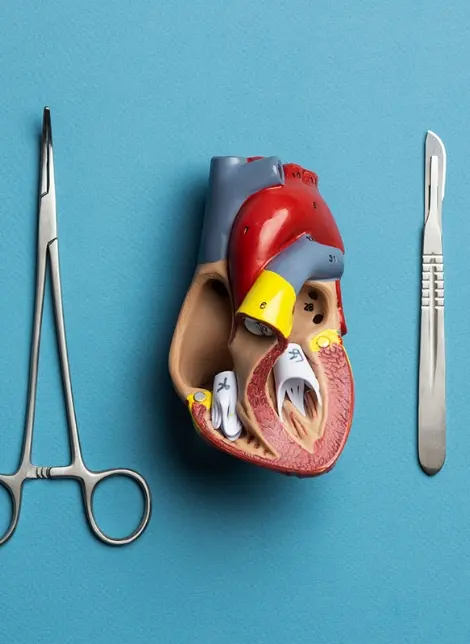
The heart is a hollow, muscular organ about the size of a clenched fist, located slightly to the left of the chest. It beats nearly 100,000 times a day, pumping blood continuously throughout life.

The heart has four chambers:

The right side pumps oxygen-poor blood to the lungs. The left side pumps oxygen-rich blood to the rest of the body.

Four valves regulate blood flow:

The right side pumps oxygen-poor blood to the lungs. The left side pumps oxygen-rich blood to the rest of the body.

Coronary Arteries & Coronary Artery Disease

The heart muscle receives blood through the coronary arteries, which originate from the aorta:

What Is Coronary Artery Disease?

With aging and risk factors, fat, cholesterol, and minerals deposit inside coronary arteries, forming plaques. These plaques:

Effects of Coronary Artery Disease

Reduced blood supply to the heart can cause:

A sudden complete blockage can permanently damage heart muscle, reducing heart function.

Managing Key Risk Factors

Experience compassionate and expert cardiac care tailored to your individual needs, combining advanced treatment, personalized attention, and trusted medical excellence, because your heart health is always our highest priority.

Damages arteries silently. Controlled through:

Stress releases adrenaline, increasing heart strain. Helpful techniques include:

What Is Coronary Artery Bypass Graft Surgery?

CABG creates new pathways for blood flow using arteries or veins taken from other parts of the body:

These grafts bypass blocked coronary arteries, restoring blood supply to the heart.
CABG can be performed:

The final decision is made by the surgeon based on real-time surgical findings.

Heart Valve Surgery Types, Causes & Treatment Options

Heart Chambers

Heart valve surgery is performed when valves fail to open or close properly due to:

Valve Repair vs Valve Replacement

Tissue Valves

Beating Heart & Minimally Invasive Bypass Surgery

Beating-heart bypass surgery avoids the heart–lung machine and is beneficial for patients with:

Nearly 90–95% of patients are suitable, but final suitability is determined during surgery.

Know Your Risk Factors for Heart Disease

You may be at higher risk if you:

Expert Guidance & Surgical Care

Under the leadership of Dr. Ganesh Shivnani at Sir Ganga Ram Hospital, patients receive evidence-based, ethical, and compassionate cardiac care—combining advanced technology with human touch.

Categories